
(604)732-7678
2526 W 5th Ave, Vancouver, BC V6K 1T1

Vancouver employment lawyer

Fired or pushed out while on disability in BC – your rights to severance, accommodation and LTD

fired while on disability in BC

Fired or pushed out while on disability in BC – your rights to severance, accommodation and LTD

If you were fired or pushed out while on disability, you are not alone

You might have been on sick leave, stress leave, long term disability, or another kind of medical leave when the email arrived or the meeting was called. Maybe you are still technically employed, but you feel constant pressure to come back before you are ready, or to “resign for health reasons.” Either way, it can feel like the ground underneath you has shifted all at once.

It is completely normal to be scared and angry. You may be worrying about how to pay the bills, whether your benefits or LTD will stop, and what you are supposed to tell your family. Many people in BC call me because they feel ashamed, as if being fired while on disability means they did something wrong. You did not cause this by getting sick or injured.

What often no one explains is that in British Columbia you still have rights, even if you were fired while on disability, pushed out on medical leave, or pressured during stress leave. Employment law, human rights law, and your long-term disability policy all continue to matter. There is usually more than one path forward, even if it feels overwhelming right now.

My goal in this guide is to slow everything down and walk you through your options, in plain language. You do not have to sort this out on your own. Tim Louis & Company offers a free consultation so you can talk through your situation with a lawyer who understands both employment law and LTD claims in BC.

Quick answer: can you be fired while on disability in BC?

The short answer is yes, you can sometimes be fired while on disability in BC, but not for just any reason. Your employer cannot legally fire you because of your disability or because you took job protected medical leave.

Three systems work together here. The BC Employment Standards Act gives you protected illness and injury leave and sets some minimum rules about termination and notice. The BC Human Rights Code says disability is a protected ground and requires employers to accommodate your medical limits to the point of undue hardship. On top of that, your long-term disability insurance and your employment contract create another layer of rights and obligations about income replacement and benefits.

When you are fired or pushed out while on disability, you are standing where all three of these systems meet. The rest of this article walks through how they fit together in real life and what practical steps you can take next.

How disability leave, LTD and employment law fit together in BC

When you are off work for health reasons, it can feel as if everything has blended into one problem. In reality, a few different systems are at play.

One piece is your medical leave from work. BC law gives many workers job protected illness and injury leave. Your employer may call it sick leave, disability leave or something else, but the basic idea is the same. You are off because of a medical condition, and you are not supposed to be punished for using that time.

Another piece is long term disability insurance. If you have LTD through your employer or a private policy, the insurer may pay a portion of your income while you cannot work. Being on LTD does not automatically end your job. It is common for people to remain employees on paper while they receive LTD benefits.

Layered over that is your actual employment relationship. Even when you are away, you still have rights around termination and severance. Factors like your age, length of service and type of work all matter when we look at whether you were treated fairly if the job ends.

These pieces overlap in important ways. Your employer still has a duty to accommodate your disability and to deal with you honestly while you are off. The insurer must follow the LTD policy and apply it in good faith. You continue to have rights under employment law and the BC Human Rights Code, even if you were fired while on LTD or during disability leave.

When people are scared and rushed, they are often pushed into decisions that quietly cut off severance, human rights remedies or future LTD payments. Understanding how these systems connect is the first step in protecting yourself before you resign, settle or sign anything.

fired while on long term disability

Fired while on disability: when termination is and is not allowed

In British Columbia, disability is protected under the BC Human Rights Code. That protection does not disappear just because you are off work. If you were fired while on disability, stress leave or medical leave, the key question is why the employer ended your job and what they did before they went that far.

An employer cannot legally fire you because you are sick, injured or using job protected medical leave. They also cannot treat termination as a shortcut instead of making a real effort to accommodate your limitations. If the real reason for the dismissal is your disability, or the employer simply did not want to deal with your restrictions, that can be discrimination.

There are situations where an employer can end employment while you are off. A genuine business closure, major restructuring, or elimination of a department may be allowed if the decision is truly unrelated to your health. Even then, they must handle the termination fairly and respect your rights to notice or severance.

The law expects employers to try reasonable accommodation before they give up on the relationship. That can include a gradual return to work, modified duties, shorter shifts, schedule changes, or moving certain tasks to other staff. Accommodation does not mean creating a perfect job or ignoring safety. It does mean taking your medical information seriously and exploring practical options instead of jumping straight to termination.

When an employer fires someone who is on disability leave without making those efforts, there may be grounds for a human rights claim as well as a wrongful dismissal claim. Even where a termination is allowed for business reasons, you may still be entitled to significant severance.

Pushed to quit while on disability: constructive dismissal in real life

Not everyone gets a clear termination letter. Many people on disability tell me, “I was not technically fired, but I felt pushed out.” In law, that kind of situation can be called constructive dismissal. It means your employer has changed your job or the way they treat you so much that they have ended the relationship even if they never use the word “fired.”

For workers on disability or medical leave, being pushed out often looks like pressure that builds over time. You may be told it would be “best for everyone” if you resign for health reasons. You might receive an ultimatum: return to full time work by a certain date or your employer will treat you as having quit. Some people come back from stress leave or LTD to find they have been quietly demoted, had their hours cut, or lost long standing responsibilities. Others face coldness, sarcasm or open hostility once they try to return.

When you are exhausted and unwell, quitting can seem like the only way to make the pressure stop. That is exactly why resignation is so risky. If you sign a resignation letter or send an email saying you are leaving, you may weaken or lose your claim to severance. Your disability insurer may argue that you chose to end your own employment and that this affects your LTD benefits.

The important thing to remember is that the law looks at what actually happened, not just what label your employer uses. Serious unwanted changes, or a toxic environment that no reasonable person would tolerate, can be treated as a dismissal even if no one says the word. Quitting should almost never be your first step. Before you resign or agree that you “voluntarily” left, talk to a lawyer about whether what you are experiencing may already be constructive dismissal.

What happens to your long-term disability if the job ends

One of the scariest questions people ask me is, “If my job is gone, do I lose my long-term disability?” The honest answer is that it depends on your policy and your situation, but in many cases LTD does not stop just because employment ends.

If your LTD claim is already approved, the insurer usually keeps paying as long as you continue to meet the medical test in the policy and you cooperate with reasonable treatment and reporting. The benefit is tied to your disability, not to whether the employer keeps you on payroll forever. That said, every policy is written a little differently, so it is important to have someone look at the wording before you make big decisions.

If you are still applying, appealing, or fighting a denial, a termination can complicate things, but it does not automatically destroy your LTD claim. Insurers sometimes try to argue that if your job ended, you were not really disabled from it, or that you could work somewhere else. The timeline of symptoms, medical notes, leave and termination becomes very important.

When a job ends, many people also lose extended health and dental coverage that was attached to their group benefits plan. That loss can hurt just as much as the job itself, especially if you rely on expensive medications or therapy.

Be very careful with any severance package that asks you to sign a broad release of “all claims.” Without meaning to, you could give up your right to pursue LTD, human rights remedies or other important claims. Before you sign anything, get legal advice from someone who understands both employment law and long-term disability.

Common pressure tactics – and how to respond

When you are on disability leave, pressure from your workplace can feel relentless. Here are some of the tactics people often face, and some practical ways to respond.

“We need your resignation so we can backfill your position.”

You do not have to resign to make life easier for your employer. A resignation can cut off severance and weaken other claims. You can reply that you are following medical advice, that you wish to keep your employment status unchanged for now, and that you will not be making a decision about resignation without legal advice.

“Sign this package by Friday or it will be withdrawn.”

Short deadlines are there to push you into signing before you understand the consequences. You can respond in writing that you have received the offer and will need time to review it with a lawyer. Reasonable employers accept that, and if they do not, it tells us a lot about how they operate.

“Your doctor must clear you for full duties right away or we will treat this as job abandonment.”

Your employer is entitled to basic medical information about your limits, but they are not entitled to ignore your doctor’s restrictions. Ask your doctor to provide clear functional limitations in writing and send those notes to your employer. Confirm by email that you are not abandoning your job and that you remain available for suitable, medically approved work.

Refusing to accept updated medical notes or ignoring your emails.

When you provide reasonable information and the employer refuses to engage, that can help your case later. Keep copies of everything you send and try to communicate in writing. If they ignore you, do not give up; keep a simple record of dates, messages and responses.

In all of these situations, try not to resign, do not sign complex documents without advice, and do not disappear. Staying calm, documenting what happens, and getting early legal guidance can make a major difference to the outcome.

Steps to protect yourself if you were fired or pushed out while on disability

When your job and your health collide, it is easy to feel frozen. A few concrete steps can protect your rights while you figure out what comes next.

  1. Step 1: Gather your documents
    Collect your employment papers in one place. That includes your employment contract, offer letters and job descriptions. Add termination or resignation documents, emails, text messages and any notes from meetings. Keep copies of medical notes, doctor’s letters and your long-term disability policy.
  2. Step 2: Write out what happened
    Create a simple timeline. Start with when your symptoms began, when you first missed work, and when you went on medical or disability leave. Add dates for every major event: requests for accommodation, return to work plans, pressure to come back, and any threats about job abandonment or resignation. Small details you note now may matter a lot later.
  3. Step 3: Do not resign or sign anything new without advice
    In BC, a quick resignation or signed package can wipe out claims for severance, human rights remedies or LTD. Employers and insurers know this. Take the pressure off yourself by deciding you will not sign or send anything important until you have spoken with a lawyer.
  4. Step 4: Talk to a lawyer who understands both LTD and employment
    Your situation sits at the intersection of disability law and employment law. A combined approach means your severance, human rights and LTD strategy work together instead of by accident pulling against each other. Contact Tim Louis for a fee consultation today.
  5. Step 5: Remember there are deadlines
    There are time limits for starting court claims, filing human rights complaints and appealing LTD denials. Some are quite short. You do not need to know all the exact dates today, but you do need to move soon enough that you do not lose options simply because time ran out.

When the job really ends: frustration of contract and long absences

Sometimes employers say, “Your employment is frustrated because you have been off too long.” It sounds harsh, and it is a real concept in law. Frustration of contract means the job has become impossible to continue because of a change no one reasonably planned for. In the disability context, it usually refers to a very serious, long-term condition that makes a return to work unlikely in the foreseeable future.

Whether frustration truly applies is a fact heavy question. Courts look at how long you have been off, what your medical team says about the future and, very importantly, what your employer did to try to accommodate you. A company that never explored modified duties or gradual return plans will have a much harder time relying on frustration.

Long term disability benefits are part of the picture. If your employment contract and benefit plan already contemplated that some workers would be off on LTD for extended periods, courts sometimes treat that as a sign that long absences were not completely unexpected.

The key message is simple. Even if your employer tells you the contract is “frustrated” and offers little or no severance, you should have the situation reviewed. In many cases there are still arguments about severance, human rights remedies or LTD that can make a real difference to your financial future.

Real outcomes: how BC cases are decided

Results in this area are not theoretical. BC courts and tribunals look at real workplaces, real illnesses and real decisions by employers.

In one type of case, a worker goes on stress leave after months of conflict. The employer makes little effort to understand the medical limits, rejects suggestions for gradual return and soon sends a termination letter that blames “fit” or “performance.” When the facts are laid out, decision makers may find that disability played a central role, leading to severance plus additional human rights damages for discrimination.

In another type of case, a worker has been on long term disability for years. Medical reports say there is no realistic prospect of returning to any work. The employer eventually ends the employment relationship, but LTD benefits continue because the worker still meets the policy test. The court looks closely at whether the contract was truly frustrated and whether any severance is still appropriate.

These examples are not promises. They are reminders that outcomes depend on the full story, not just one letter or one meeting. Every case is unique. Bring your facts, your documents and your questions. A careful review can help you understand where you stand and what realistic options you have.

FAQs

Can my employer fire me while I am on disability leave in BC?

They cannot legally fire you because of your disability or because you used protected medical leave. In some cases, they can end employment for genuine business reasons, but your rights to severance and human rights protection still apply.

Do my long-term disability benefits stop if I am fired?

In many cases LTD continues as long as you meet the medical test in the policy, even if your job ends. The exact answer depends on your policy wording and the facts, so it is important to have it reviewed.

What if my employer pushes me to resign while I am on sick leave?

Pressure to “resign for health reasons” or accept that you have quit can be a sign of constructive dismissal. Do not resign before getting legal advice, especially if you are on disability leave in BC.

What is constructive dismissal for someone on disability?

Constructive dismissal happens when your employer changes your job or treatment so much that it is as if you were fired, even without a termination letter. For people on disability, that often looks like ultimatums, demotions, or a hostile return to work.

Should I sign a severance package while I am on LTD or medical leave?

Not without advice. A quick signature can quietly give up your rights to full severance, human rights remedies or future LTD benefits, so have a lawyer review any package before you agree.

Next steps – talk to a lawyer who understands both LTD and employment

If you were fired or pushed out while on disability, this did not happen because you got sick or injured. You are allowed to ask for help and to take your situation seriously.

The questions you are facing sit at the overlap of long-term disability, employment law and human rights. This is the work Tim Louis & Company does every day. Tim has spent decades helping people in BC who are off work on LTD, stress leave or medical leave, and need clear, plain advice about what to do next. There is no pressure and no judgment. The goal is to help you understand your rights so you can make calm decisions.

If you would like to talk through your options, contact us for a free consultation. You can call Tim Louis & Company at (604) 732-7678, email timlouis@timlouislaw.com, or use the contact form on our website. Services are available in English and Spanish. A short conversation can give you a clearer picture of where you stand and what realistic steps are available.

Further reading and resources

Some people feel better when they can read more before they reach out. If that sounds like you, these guides are a good starting point.

If you like to understand the systems before you pick up the phone, these materials can help. When you are ready, we are here to walk through your own facts and next steps with you.

🔁 This page is part of our Living Content System™, a visibility architecture powered by the Total Visibility Architecture™ (TVA) and Aurascend™, continuously updated for accuracy, AI indexability, trust signals, and BC legal compliance for long-term disability and employment law issues.
🕒 Last reviewed: by Tim Louis,
🤝 Optimized with Fervid Solutions (Visibility · SEO · Marketing)
fired while sick
Employment
Tim Louis

Fired While Sick

Employment Law · Long-Term Disability Should You Sign a Severance Release If You Were Fired While Sick, on Medical Leave, or on LTD in BC? By Vancouver employment and LTD lawyer Tim Louis Quick answer Do not sign right away. If you were fired while sick, on medical leave, or

Read More »
Work, Volunteer, or Travel While on LTD in BC
Disability Claim
Tim Louis

Work Volunteer or Travel While on LTD in BC

Long-Term Disability Can You Work, Volunteer, or Travel While on LTD in BC? What Claimants Need to Know Before an Insurer Uses It Against Them By Long-Term Disability Lawyer Tim Louis If you are on long-term disability and trying to hold onto some version of ordinary life, this question can

Read More »

Workplace Stress & Disability

Workplace Stress & Disability: Your Legal Rights in BC

Workplace Stress as a Disability in BC: Your Legal Rights Explained

By Tim Louis, Vancouver Employment Lawyer

Work shouldn’t make you sick. Yet more and more people in Vancouver and across BC are telling me the same story: escalating workloads, toxic managers, constant emails at night—until the stress becomes anxiety, depression, burnout, or even PTSD. Many workers don’t realize that when stress crosses the line into a diagnosed condition that prevents you from working, it can be a disability under the law—raising both employment rights (accommodation, protection from retaliation) and potential long-term disability (LTD) coverage.

This guide bridges two areas that are too often treated separately: employment law and LTD law. I’ll explain how psychological safety obligations in BC workplaces interact with LTD policies; what evidence turns “workplace stress” into a strong disability claim; and the common mistakes to avoid when your employer or insurer pushes back.

At Tim Louis & Company, I’ve helped workers facing toxic workplace situations protect their jobs, obtain proper accommodations, and—when needed—secure LTD benefits for work stress–related disabilities. If you’re searching for psychological safety claims in BC, wondering whether work stress can qualify for LTD in Vancouver, or exploring a toxic workplace disability claim, you’re in the right place.

In this article, you’ll learn:

If your health is suffering because of work, you’re not alone—and you have options. Let’s walk through them together.

What Counts as Workplace Stress in BC Law?

“Workplace stress” isn’t just a buzzword — in BC law, it has real meaning. Under the Employment Standards Act, the Human Rights Code, and WorkSafeBC obligations, employers must provide a workplace that is physically safe and psychologically safe. That means protecting employees from harassment, bullying, and workloads so overwhelming they threaten health.

But not every stressful day at work qualifies as a legal issue. Courts and tribunals in BC look for stress that rises to the level of injury or illness. This often shows up in a medical diagnosis:

  • Anxiety disorders triggered by toxic environments
  • Major depression caused by chronic workplace harassment
  • PTSD after traumatic workplace incidents
  • Burnout syndrome leading to functional incapacity

In other words, it’s not about “having a tough boss” — it’s about whether your work conditions have pushed you into a medically recognized disability. And once that line is crossed, employment law and LTD law intersect: your employer has a duty to accommodate, and your insurer may owe you disability benefits.

Psychological safety is the legal and moral standard in BC. Employers must ensure workers are not only physically safe but also shielded from harm to their mental health. When they fail, the law provides remedies — and your rights extend into both employment protections and LTD coverage.


When Stress Becomes Disability (The Crossover Zone)

Not every bad day at work is a disability. But when stress crosses the line into a medical condition, the law in BC treats it very differently. Courts and tribunals have long recognized that mental health injuries caused by the workplace are real, disabling, and legally protected.

I regularly meet clients whose jobs pushed them past the breaking point. For some, years of a toxic workplace environment led to chronic anxiety or depression. Others developed PTSD after harassment or traumatic incidents at work. Still others describe what’s now widely recognized as burnout—a level of exhaustion so deep that normal functioning is no longer possible.

These are not just feelings. They are clinical conditions—diagnosed by doctors and recognized by our courts and tribunals as genuine disabilities. And when stress reaches this level, it doesn’t just engage your employment rights under the Human Rights Code. It can also trigger your right to long-term disability benefits.

The Supreme Court of Canada confirmed this in Fidler v. Sun Life (2006 SCC 30), where the court held that so-called “invisible illnesses” like fibromyalgia and chronic fatigue are just as valid as visible, physical disabilities. The same reasoning applies here: anxiety, depression, PTSD, and burnout caused by workplace stress are all real disabilities, and LTD insurers cannot dismiss them simply because they lack “objective” lab results.

If you believe your work stress has turned into a disability, you may have both employment law protections and a valid LTD claim. Learn more about how we help with Long-Term Disability claims here »

Common Employer and Insurer Pushback

If you’re thinking about making a claim for stress-related disability, it helps to know what you’re likely to hear in response. Unfortunately, both employers and LTD insurers often push back hard when mental health is involved.

  • “It’s just stress, not a disability.”
    Employers sometimes minimize what you’re going through. But once stress has been diagnosed as anxiety, depression, PTSD, or burnout, the law recognizes it as a real disability that requires accommodation.
  • “There’s no objective evidence.”
    Insurers regularly deny claims on this basis. But the courts—including the Supreme Court of Canada in Fidler v. Sun Life—have made it clear that disabilities don’t need a blood test or an MRI to be valid. Your doctor’s diagnosis, treatment history, and lived symptoms are enough.
  • Missed deadlines.
    Another common tactic is to deny on technicalities. Employment grievances often have short deadlines, and LTD insurers require prompt notice—sometimes as little as four weeks. Missing either can harm your case, which is why early advice matters.
  • Surveillance and social media.
    Insurers may monitor claimants, even online. A smiling photo at a family event can be twisted to argue you’re not really disabled. This makes it crucial to be mindful of what you share.

The bottom line? Employers and insurers often try to shut down stress-related claims before they start. Knowing these tactics—and preparing your evidence early—can make all the difference.


Workplace Stress and Disability - depression and LTD

Legal Rights You Need to Know

When workplace stress becomes a disability, you don’t just have one set of rights—you may have two. Both employment law and disability law give you important protections in BC.

Employment Law Protections

  • Right to accommodation (Human Rights Code).
    If you’ve been diagnosed with anxiety, depression, PTSD, or another stress-related condition, your employer has a legal duty to accommodate you to the point of undue hardship. That may mean reduced hours, modified duties, or time off for treatment.
  • Psychological safety obligations (WorkSafeBC).
    Employers must provide a workplace that is both physically and psychologically safe. Chronic stress, bullying, and harassment fall within the scope of their responsibilities.
  • Protection from retaliation or wrongful dismissal.
    The law prohibits employers from punishing you for asserting your rights or disclosing a disability. If you are fired or mistreated after requesting accommodation, you may have a claim for wrongful dismissal or discrimination.

Disability Law Protections

  • LTD coverage for stress-induced illness.
    If your condition is supported by medical evidence, LTD insurers cannot dismiss it as “just stress.” Psychological disabilities qualify for coverage.
  • Court recognition of psychiatric/psychological claims.
    BC courts, as well as the Supreme Court of Canada in Fidler v. Sun Life, have affirmed that “invisible illnesses” are valid grounds for disability claims.
  • Burden of proof principle.
    You don’t need perfect medical tests to prove your case. Courts often accept evidence from your treating doctors, your own symptom journals, and even statements from family or co-workers as valid support for your claim.

The takeaway: you’re not powerless. Both employment law and LTD law work together to protect your health, your job, and your income.


Case Law Anchors

Courts and tribunals in BC and across Canada have made it clear: stress-related conditions can be true disabilities, worthy of both accommodation and LTD benefits. Three key cases stand out:

  • Fidler v. Sun Life Assurance Co. of Canada (2006 SCC 30).
    The Supreme Court of Canada confirmed that so-called “invisible illnesses” like fibromyalgia and chronic fatigue are valid disabilities under LTD policies. This principle extends directly to stress, anxiety, and depression—conditions that can’t always be measured with a blood test but are nonetheless disabling.
  • Pickering v. Workers’ Compensation Board (2025 BCSC 376): In this case, the BC Supreme Court narrowed the labour relations exclusion in claims for mental stress. It held that certain employer decisions, when made in bad faith or unreasonably, may lead to a valid claim for chronic mental stress.
  • Saadati v. Moorhead, SCC 2017 28: The Supreme Court recognized that depression, anxiety, and other mental injuries can be compensable in personal injury / insurance contexts, provided good medical evidence is in place.
  • BC Human Rights Code / BCHRT guidance: The Tribunal has ruled that stress or anxiety in isolation may not be sufficient for a duty to accommodate, but when supported by medical diagnosis and evidence of impact on work, the duty to accommodate is triggered. Employers may be required to provide modified duties, reduced hours, or other supports, up to undue hardship.

These cases confirm what many workers already know from lived experience: stress can be disabling, and both employers and insurers are legally obligated to treat it seriously.

Evidence That Strengthens a Stress-to-LTD Claim

When it comes to LTD claims for stress-related conditions, evidence is everything. Insurers often say, “we need objective proof.” The good news is that courts in BC have confirmed what matters most isn’t a lab test—it’s credible documentation from doctors, specialists, and the people who know you best.

The strongest stress-to-LTD claims usually include:

  • Medical reports from specialists.
    A psychiatrist, psychologist, or treating physician can diagnose anxiety, depression, PTSD, or burnout, and confirm how it affects your ability to work.
  • Functional Capacity Evaluation (FCE).
    An FCE measures your ability to perform tasks—mental and physical—and can demonstrate how stress-related illness limits your daily functioning.
  • Symptom journals.
    Daily notes about your sleep, fatigue, anxiety, panic attacks, or ability to focus can become powerful evidence when reviewed alongside medical reports.
  • Statements from family, friends, or co-workers.
    Lay witness testimony is valid evidence. Courts have accepted this kind of support to confirm the impact of stress on your work and life.

When these forms of evidence are combined, they give insurers and courts a clear picture of why you can’t work.

For more practical answers, visit our FAQ Hub, where we cover the most common questions about stress, employment rights, and LTD claims.

Frequently Asked Questions

Can workplace stress qualify me for LTD in BC?
Yes. If stress has led to a medical condition such as anxiety, depression, PTSD, or burnout that prevents you from working, it can qualify as a disability under your LTD policy.

Is stress considered a disability under BC law?
Stress on its own is not enough. But once it becomes a diagnosed medical condition, BC law—including the Human Rights Code—recognizes it as a disability requiring accommodation.

What if my employer won’t accommodate my condition?
You have the right to accommodation up to the point of undue hardship. If your employer refuses, you may have a claim under the BC Human Rights Code or for wrongful dismissal.

What if my LTD claim for stress is denied?
Denials are common. Insurers often argue there is “no objective evidence.” Courts, however, have ruled that stress-related illnesses are valid disabilities. If your claim is denied, it’s important to seek legal advice early to protect your rights.

call to action

Key Takeaways

  • Stress can evolve into a recognized disability under BC law. Once stress is diagnosed as anxiety, depression, PTSD, or burnout, it becomes a condition protected under both the Human Rights Code and LTD policies.
  • Both employment law and LTD law protect workers — but timelines differ. Employment grievances, human rights complaints, and LTD claims all have different deadlines. Missing one can jeopardize your case.
  • Strong medical evidence + early legal help are critical. Psychiatric or psychological reports, symptom journals, and support statements from family or co-workers all strengthen your claim. Seeking advice early ensures deadlines are met and evidence is gathered properly.
  • You don’t have to face this alone. At Tim Louis & Company, we help workers navigate both Employment Law and Long-Term Disability Law to protect their health, income, and future. For more answers, see our FAQ Hub.

Conclusion & Next Steps

If stress at work has taken a toll on your health, you have rights under employment law and long-term disability law in BC. At Tim Louis & Company, we’ve spent decades helping workers protect their jobs, secure accommodations, and win LTD benefits.

Tim Louis & Company has decades of experience bridging employment law and LTD claims. Contact us today to protect your health and your future.


⭐⭐⭐⭐⭐⭐ Client Reviews

…professional, knowledgeable, but also patient and supportive.” — Joan Rike (★★★★★)

Very good attention to detail. Friendly and prompt service!” — Bruce Rooney (★★★★★)

He jumped on calls and answered emails within a business day…” — Mike Lucas (★★★★★)

Tim and his team were excellent… Highly recommended.” — Vajeh Vali (★★★★★)

I can’t recommend Tim Louis highly enough…” — Bill K (★★★★★)

Contact Tim Louis for a free, no-obligation consultation to review your claim and discuss the next steps.

📞 Phone: (604) 732-7678
📧 Email: timlouis@timlouislaw.com

Serving clients across Metro Vancouver and all of BC, we’re here to make sure your voice — and your evidence — is impossible to ignore.

🔁 This page is part of our Living Content System™, a visibility architecture powered by the Total Visibility Architecture™ (TVA) and Aurascend™, continuously updated for accuracy, AI indexability, trust signals, and legal compliance.
🕒 Last reviewed: by Tim Louis,
🤝 Optimized with Fervid Solutions (Visibility · SEO · Marketing)
Facebook
Twitter
LinkedIn
fired while sick
Employment
Tim Louis

Fired While Sick

Employment Law · Long-Term Disability Should You Sign a Severance Release If You Were Fired While Sick, on Medical Leave, or on LTD in BC? By Vancouver employment and LTD lawyer Tim Louis Quick answer Do not sign right away. If you were fired while sick, on medical leave, or

Read More »
Work, Volunteer, or Travel While on LTD in BC
Disability Claim
Tim Louis

Work Volunteer or Travel While on LTD in BC

Long-Term Disability Can You Work, Volunteer, or Travel While on LTD in BC? What Claimants Need to Know Before an Insurer Uses It Against Them By Long-Term Disability Lawyer Tim Louis If you are on long-term disability and trying to hold onto some version of ordinary life, this question can

Read More »

Can My Employer Force Me to Take Vacation in BC?

Can My Employer Force Me to Take Vacation in BC?

Can My Employer Force Me to Take Vacation in BC?

Here’s What BC Law Really Says—and What You Can Do If It Feels Wrong

By Tim Louis

“In British Columbia, your employer can schedule your vacation—but only if they follow certain rules.”


What to Do When You’re Suddenly Told to Take Vacation in BC

“What are my rights if my boss forces me to take time off in BC?”

It’s July in Vancouver. The sun’s finally out, business is picking up—and then, out of nowhere, your manager tells you:

“You’re taking next week off. We’ve scheduled your vacation.”

You blink. You didn’t ask for time off. You didn’t plan for this. And most of all—you weren’t ready.

Can your employer really force you to take vacation time in British Columbia?
The short answer: Sometimes—but not without rules.

Over my 40 years as an employment lawyer here in Vancouver, I’ve spoken with countless workers caught off guard like this. Retail staff. Servers. Hotel workers. Warehouse employees. And the story is always the same:

“I didn’t ask for vacation—but now I’m being told I’m off the schedule. What can I do?”

Here’s the good news: You have more rights than you think.
And if something doesn’t feel right, there’s a reason for that.

Whether your employer is suddenly assigning time off, reducing your hours, or pressuring you into “using up” vacation without notice—this article will help you understand what’s legal, what’s not, and what to do next.

Because your time matters. And your rights deserve to be respected.

What Does BC Law Say About Vacation Time?

People often ask:

“What are the vacation rules in British Columbia?”
“How much vacation do I get after one year in BC?”

Under the British Columbia Employment Standards Act, most employees are entitled to paid vacation time after 12 months of work with the same employer.

Here’s what the law says:

Vacation Entitlement in BC:

  • After 12 consecutive months of employment, you are entitled to:
    • 2 weeks of paid vacation
  • After 5 consecutive years with the same employer:
    • 3 weeks of paid vacation

Vacation pay is calculated as a percentage of your total wages:

  • 4% for the first five years
  • 6% after five years of continuous service

View the official BC Government guidelines here


Can Your Employer Choose When You Take It?

Yes—but there are important limits.

Your employer in BC can schedule your vacation time, even if you didn’t request it. However, they must:

  • Provide reasonable notice
  • Ensure you’re not being targeted or treated unfairly
  • Schedule time off in a way that’s consistent and justifiable

In short: employers can assign vacation—but they can’t abuse that power.


Insight from Tim:

“As an employment lawyer with over 40 years of experience, I’ve seen too many employers misuse this policy to quietly push employees out or manipulate scheduling. Vacation should never feel like punishment.”
Tim Louis, Vancouver Employment Lawyer


5 Red Flags That Your Vacation Rights Might Be Violated

“In BC, if your employer forces you to take time off without warning or fairness, it could violate your rights.”

Sometimes it’s not what your employer says—it’s how they do it.

If you’ve been told to take vacation and something feels off, trust that instinct. Below are five clear red flags that suggest your employer may be crossing the line.


  1. No Notice Was Given

Legal Concern: May breach the “reasonable notice” expectation.
If your employer drops a last-minute vacation decision on you, it could violate employment standards—even if you’ve earned the time.

You should be given a fair heads-up so you can actually plan and benefit from your time off—not just disappear from the schedule.

  1. Only You Were Singled Out

Legal Concern: Possible discrimination or retaliation.
Are other employees unaffected? Are you the only one being “forced” into time off during slow periods?

This could point to deeper issues—like targeting, unfair discipline, or subtle workplace punishment.

  1. Vacation Is Scheduled Right After a Conflict

Legal Concern: Could signal a constructive dismissal pattern.
If you spoke up, raised a concern, or clashed with management—and suddenly your time off appears out of nowhere—this could be part of a bigger issue.

Forced vacation should never be used as a pressure tactic or punishment.

  1. You’re Told to Use “Unpaid Time Off”

Legal Concern: Likely unlawful.
Vacation is supposed to be paid time off. If your employer says, “we can’t pay you but we’ll call it vacation,” it’s likely a breach of BC’s employment law.

Don’t let your legal entitlements be erased with vague terms.

  1. HR Can’t Explain the Reason

Legal Concern: Lack of transparency = Risk Signal.
If your manager or HR team can’t clearly tell you why the time off was scheduled, or they give conflicting answers—take that as a warning sign.

This confusion is often used to discourage pushback—but clarity is your legal right.

Tim’s Advice:

“When forced vacation is used inconsistently or without reason, it’s not just bad management—it could be a violation of your rights under BC law.”


What You Can Do If It Feels Unfair

“What should I do if I’m being forced to take vacation in BC?”

If something about your forced vacation doesn’t sit right, trust your instincts.

Here’s what you can do—right now—to protect your rights and prepare for next steps:

  1. Review Your Vacation Accrual
  • Check your most recent pay stub or employment records.
  • Make sure you’ve actually earned the vacation you’re being told to take.

If they’re assigning vacation time you haven’t accrued, that’s a red flag.

  1. Ask for Written Confirmation and Reason
  • Politely request an email or letter explaining why the vacation is being scheduled.
  • Keep a record of the explanation—or the refusal to give one.

Clear communication forces accountability. Silence often signals trouble.

  1. Track All Dates, Emails, and Conversations
  • Write down what was said, when it was said, and who was present.
  • Save emails or messages related to the time-off decision.

Tim’s Advice:
“I encourage every client to keep a paper trail. It strengthens your case if things escalate.”


  1. Speak to an Employment Lawyer Before Reacting Emotionally
  • Don’t quit on the spot. Don’t send a heated message.
  • Instead, reach out for guidance. It may be a misunderstanding—or it may be something more serious.

You may have grounds for a constructive dismissal claim or a compensation case.
But the outcome depends on how you handle things in the moment.

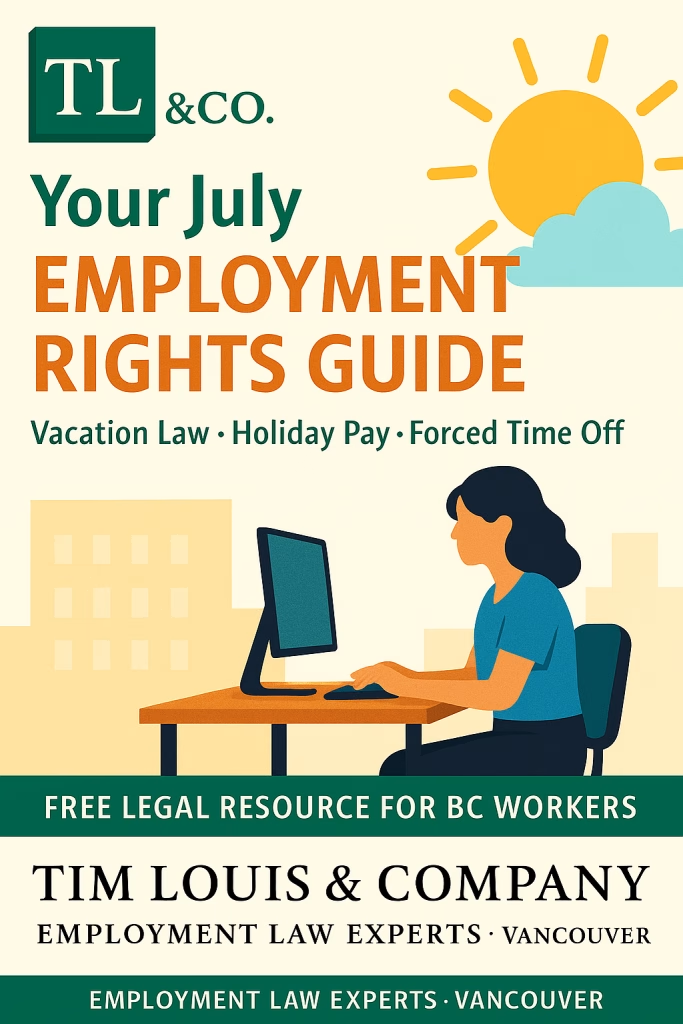
Free Download: Your Employment Rights Guide

If you’re unsure about your vacation rights this summer—or feel like something isn’t quite right—we’ve created a simple, powerful resource just for you.

Download: Your Employment Rights Guide

This free, mobile-friendly PDF includes:

  • Canada Day Pay Rules
    Understand who qualifies for stat holiday pay—and how it’s calculated in BC.
  • Vacation Law Summary
    A plain-language breakdown of what your employer can and can’t do.
  • Documentation Checklist
    What to write down and save if you think your rights have been denied.

What You’ll Get:

  • Written by real employment law professionals
  • Designed for workers in BC
  • Takes less than 10 minutes to read
  • No legal jargon—just the facts, your rights, and your next step

 Download the Free Guide

“It’s quick, clear, and designed for BC workers like you.”

When to Speak to an Employment Lawyer

“When should I call a lawyer about forced time off in BC?”

Sometimes the biggest red flag is your own gut feeling. If you’re being told to take time off that you didn’t ask for—especially if it’s unpaid, sudden, or feels like retaliation—it might be time to talk to someone.

Here are some common situations where speaking to an employment lawyer like Tim Louis is not only smart—it may protect your income, reputation, and peace of mind:

Repeat Violations

If this isn’t the first time your schedule or vacation has been changed without warning, it could show a pattern of abuse—especially in retail, food service, or shift-based work environments.

Sudden Time Off Without Pay

This is one of the most common—and most dangerous—forms of manipulation. Employers may try to call it “vacation” or “flex time,” but under BC law, vacation is paid. If you’re told to take unpaid time off, seek help immediately.

You’re Being Pressured to Quit

Some employers will quietly force employees into difficult, confusing positions—hoping they’ll resign. If your “forced vacation” feels like a step toward the door, don’t walk out… speak out.

Tim’s Final Word

“I’ve represented workers in BC for over 40 years, and I can tell you: when something doesn’t feel right, it’s worth speaking up. You deserve to be treated fairly—and the law is here to protect you.”
Tim Louis, Vancouver Employment Lawyer


Request a Free Consultation

forced time off work

Frequently Asked Questions

Can my employer force me to take vacation time in BC?

Yes, but only under specific conditions.
Your employer in BC can schedule your vacation time, but they must provide reasonable notice and cannot do so in a way that’s discriminatory, retaliatory, or unfair.

How much paid vacation am I entitled to in BC?

If you’ve worked 12 consecutive months, you’re entitled to 2 weeks of paid vacation.
After 5 years, you’re entitled to 3 weeks. Vacation pay is calculated at 4% to 6% of your gross wages, depending on your tenure.

Is my employer allowed to schedule my vacation without asking me?

Yes, employers can choose vacation timing—but they must act in good faith. If the vacation is last-minute, feels like punishment, or targets you unfairly, you may have grounds to take legal action.

What if I’m told to take “unpaid time off” instead of vacation?

That’s likely unlawful.
Vacation in BC is paid by law. If you’re being forced to take time off without pay and without a formal vacation record, speak to a lawyer.

Could forced vacation be considered constructive dismissal?

Yes.
If your vacation is used as a form of pressure, retaliation, or is paired with reduced hours or job instability, it may form part of a constructive dismissal case. Documentation is key.

What should I do if I think my rights are being violated?

  1. Check your vacation accrual
  2. Ask for written explanation
  3. Keep a paper trail
  4. Talk to an employment lawyer before making a big decision

Download our July Rights Guide

Key Takeaways: Know Your Vacation Rights in BC

✔ Yes, employers can schedule vacation—but only with notice and fairness.
✔ Forced, unpaid time off is likely unlawful.
✔ You are entitled to vacation pay—minimum 4% of earnings after 12 months.
✔ If your vacation feels like punishment or retaliation, it could be constructive dismissal.
✔ Keep records, request written explanations, and speak up if something feels off.

Your time is legally protected. Don’t let an unfair policy put your income or peace of mind at risk.

Speak to a Trusted Employment Lawyer in BC

If you’re worried that your employer is abusing vacation scheduling policies, pressuring you to quit, or quietly cutting your hours—don’t guess. Get expert advice from one of Vancouver’s most trusted employment lawyers.

“I’ve helped thousands of workers in BC stand up to unfair treatment over my 40+ year career. If you’re being pushed around at work, I’m here to help.”
Tim Louis, Vancouver Employment Lawyer

Free Consultation Options:

⭐ ⭐ ⭐ ⭐ ⭐ “Tim’s advice was concise and candid which helped me to make a quick decision on the first step for my employment issue. Thank you Tim! I highly recommend Tim Louis & law firm.”
Grant Kuo, Google Review


Further Reading on Employment Rights in BC

Explore trusted resources to protect your rights—whether you’re dealing with forced vacation, unpaid leave, or pressure at work.

Tim Louis Law – Legal Support for BC Workers

Employment Law in Vancouver – Tim Louis & Company
An overview of your rights as an employee in BC—and how we can help if your employer crosses the line.
https://timlouislaw.com/employment-lawyer-vancouver/

Constructive Dismissal: Know Your Rights
Learn when a job change becomes illegal and what to do if your employer forces you out.
https://timlouislaw.com/constructive-dismissal-understanding-your-rights-as-an-employee/

Wrongful Dismissal in Vancouver
If you’ve been let go unfairly, this guide explains what severance and compensation you may be entitled to.
https://timlouislaw.com/wrongful-dismissal-vancouver-bc/

Employee Rights FAQ – Tim Louis Law
Plain-language answers to BC’s most common workplace questions—from scheduling to severance.
https://timlouislaw.com/faq-hub/

Contact Tim Louis & Company
Speak directly with our team. Maya, our friendly assistant, is ready 24/7 to help you start the conversation.
https://timlouislaw.com/contact-us/

BC Government Employment Law Resources

Vacation & Vacation Pay – BC Employment Standards
Official rules about vacation time in BC: who qualifies, how it’s calculated, and what employers must do.
https://www2.gov.bc.ca/gov/content/employment-business/employment-standards-advice/employment-standards/time-off/vacation

Employment Standards Act – Full Legislation (BC Laws)
The full legal text of BC’s employment law—ideal for verifying your rights word-for-word.
https://www.bclaws.gov.bc.ca/civix/document/id/complete/statreg/96113_01

Constructive Dismissal – Government of Canada
Clear federal guidance on what constructive dismissal means—and how to prove it.
https://www.canada.ca/en/employment-social-development/programs/laws-regulations/labour/interpretations-policies/constructive-dismissal.html

Helpful Nonprofit & Advocacy Resources

People’s Law School – Worker Rights in BC
Trusted, free legal education that breaks down BC employment laws in everyday language.
https://www.peopleslawschool.ca/

Retail Action Network – Worker Advocacy & Support
A grassroots organization helping retail and hospitality workers stand up to unfair scheduling and employer pressure.
https://workersolidarity.ca/about/

🔁 This page is part of our Living Content System™ and is reviewed regularly for accuracy and legal compliance.
🕒 Last reviewed: by Tim Louis, Employment Lawyer in Vancouver
fired while sick
Employment
Tim Louis

Fired While Sick

Employment Law · Long-Term Disability Should You Sign a Severance Release If You Were Fired While Sick, on Medical Leave, or on LTD in BC? By Vancouver employment and LTD lawyer Tim Louis Quick answer Do not sign right away. If you were fired while sick, on medical leave, or

Read More »
Work, Volunteer, or Travel While on LTD in BC
Disability Claim
Tim Louis

Work Volunteer or Travel While on LTD in BC

Long-Term Disability Can You Work, Volunteer, or Travel While on LTD in BC? What Claimants Need to Know Before an Insurer Uses It Against Them By Long-Term Disability Lawyer Tim Louis If you are on long-term disability and trying to hold onto some version of ordinary life, this question can

Read More »
Scroll to top